Customer journey ·
Restaurant loyalty card: paper or digital?
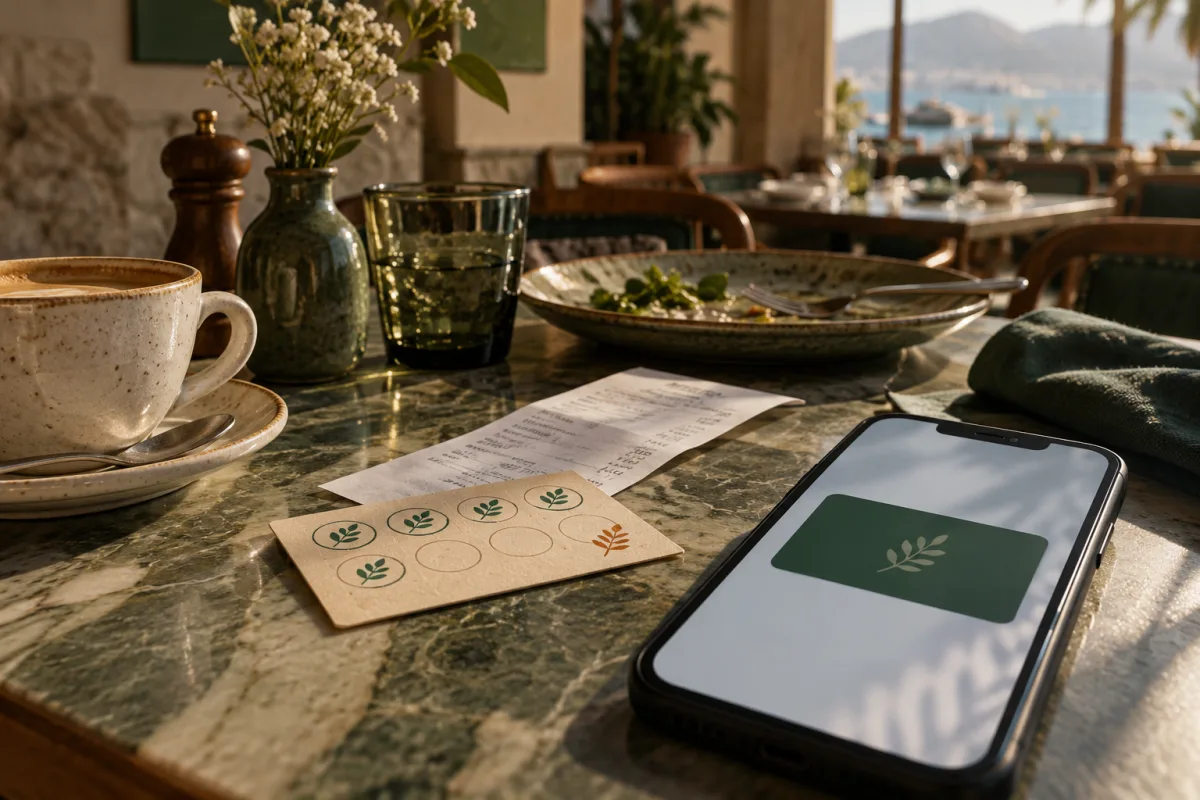
A stamp card is handed over in two seconds, and it gets lost almost as fast: forgotten at home, wet, shared between two brothers. A card on a phone solves part of the problem if it stays as simple as paper: no app to install, a quick scan at the counter, a clear progress display.
Why the paper card gets lost
The customer has to remember to bring the card, keep it clean and show it at the right moment. In Djibouti, as elsewhere in the Horn of Africa, many customers always have their phone with them, far fewer a small stamped card. Every lost card also erases the visits already made, and the customer starts again from zero.
On the restaurant side, a stamp is easy to copy, and nobody knows how many cards are in circulation or who the regulars are.
Try it in your restaurant
- Ask your last five customers if they still have your paper card on them.
- Count the cards handed out last month and the rewards actually used.
A digital card with no app to install
The customer does not want to manage an account. He wants to see his progress and receive his reward. If the card asks for too many fields or an app, the team spends its time explaining instead of serving.
A QR code that opens the restaurant's page directly gives access to the card at the right moment. A card saved in Apple Wallet or Google Wallet stays on the phone with nothing to install. Validation of the visit should stay with the team, to avoid stamps added without a real visit.
Try it in your restaurant
- Create a card from an ordinary phone, without help, and time it.
- Test the scan during a quiet service, then during a busy one.
Make progress clear and respect the customer
Show the reward, the number of validated visits and what is left to do: "2 more visits before your free tea" is easier to understand than a points balance. The National Restaurant Association reports that American customers enrolled in loyalty programmes mostly look for more value from them: the reward must be visible.
Ask only for what the programme needs, and keep the card separate from the agreement to receive messages. The customer must be able to refuse messages and keep his card.
This is how the Loyalis card works: the customer scans the table QR, adds it to his phone, and the team validates the visit at the counter.
Try it in your restaurant
- Write the reward in concrete words rather than in points.
- Prepare one sentence for the team: "Your card stays in your phone, even if you change bags."
Bring your customers back, no paper card.
Loyalis connects a card on the phone, the scan at the counter and progress the customer can see.
Create my free program